

it would definitely be sad to waste precious DYL with poor brewing technique!
Was it as delicious as it looks?
What Oolong Are You Drinking
-
ShineMagical

- Posts: 662
- Joined: Wed Nov 01, 2017 4:13 pm
- Location: Washington DC
I heard that the 2025 harvest had perfect weather conditions, and the taste difference was apparent!
I was curious since a lot of the high elevation gardens have been decommissioned by the government... according to AI, the 104k label in the name is just marketing since the actual elevation he lists is lower than what could be considered 104k
I was curious since a lot of the high elevation gardens have been decommissioned by the government... according to AI, the 104k label in the name is just marketing since the actual elevation he lists is lower than what could be considered 104k
-
ShineMagical
- Posts: 662
- Joined: Wed Nov 01, 2017 4:13 pm
- Location: Washington DC
Having Lao Jun Mei from Four Seasons Tea Co.
Tasty although there isn’t an underlying brightness/tingling that I like. It was more grounded
Tasty although there isn’t an underlying brightness/tingling that I like. It was more grounded
The 'Premium Dong Ding' from Gaoshan / Taiwan Oolong Joy from earlier today - nice tea, feels well-integrated with a long aftertaste.
(the leaves are more of a deep, dark green than the photo might suggest)
Andrew
(the leaves are more of a deep, dark green than the photo might suggest)
Andrew
- Attachments
-
- _MG_1091.jpg (180.3 KiB) Viewed 1125 times
Slowly getting around to drinking some of the aged wulong that I got in Taiwan - this one's a 20-something year old twice-roasted Alishan (not the generic 'twenty years old' kind, but rather that the owner told me the exact age but I forgot to write it down...).
Very aromatic; it filled the room with bright aromas of stone fruits, and has a very nice, long aftertaste that reminds me of sherried whiskies.
I spent quite a bit of time drinking tea in this shop after asking if he had any aged tea (communicating only through phone translations), and also got some 26-year old once-roasted Lishan, as well as a little mini-cake of aged baozhong that the owner did as an experiment just to see what'd happen.
One of the most interesting teas was an aged wulong, probably from the 90s or 2000s given how tightly it was rolled, which had a very strong aged puer character for reasons that I don't understand - and when I said this to the owner, he told me that that was why he gave it to me to try, to show how you can't predict how an aged tea will turn out. He even brewed up a fairly tightly-compressed 90s puer cake, and the wulong tasted more puer-like than the puer... It wasn't for sale, but it was a very fun tea to try.
Andrew
Very aromatic; it filled the room with bright aromas of stone fruits, and has a very nice, long aftertaste that reminds me of sherried whiskies.
I spent quite a bit of time drinking tea in this shop after asking if he had any aged tea (communicating only through phone translations), and also got some 26-year old once-roasted Lishan, as well as a little mini-cake of aged baozhong that the owner did as an experiment just to see what'd happen.
One of the most interesting teas was an aged wulong, probably from the 90s or 2000s given how tightly it was rolled, which had a very strong aged puer character for reasons that I don't understand - and when I said this to the owner, he told me that that was why he gave it to me to try, to show how you can't predict how an aged tea will turn out. He even brewed up a fairly tightly-compressed 90s puer cake, and the wulong tasted more puer-like than the puer... It wasn't for sale, but it was a very fun tea to try.
Andrew
- Attachments
-
- _MG_1136.jpg (189.73 KiB) Viewed 302 times
It's a nice tea, but it's combined with some nice memories as well - something more than just 'I bought this on the internet', which is the extent of the story for most of my teas.
And yes, this one's an old zini, but I've played with old oolongs (like aged baozhong, aged Dong Ding-style teas) in a few little zhuni pots and medium-sized Chaozhou pots (and sometimes in a much bigger zini for lazier brewing). I don't have enough of these older teas to 'dedicate' a teapot to them (nor do I think that that's necessary for most teas), so most of my teapots are just categorised into 'old puer and other heicha', 'wulong', and 'yancha', depending on what seems to work for them.
The key, unfortunately, is to be in the fortunate position where you have enough teapots to be able to experiment, since you can never predict whether a tea will get along with a particular teapot with any certainty.
Andrew
It's interesting that these teas have aged so differently. Sounds like you got an amazing haul, particularly that aged Alishan with the stonefruit notes.Andrew S wrote: ↑Fri Mar 06, 2026 4:39 pmSlowly getting around to drinking some of the aged wulong that I got in Taiwan - this one's a 20-something year old twice-roasted Alishan (not the generic 'twenty years old' kind, but rather that the owner told me the exact age but I forgot to write it down...).
Very aromatic; it filled the room with bright aromas of stone fruits, and has a very nice, long aftertaste that reminds me of sherried whiskies.
I spent quite a bit of time drinking tea in this shop after asking if he had any aged tea (communicating only through phone translations), and also got some 26-year old once-roasted Lishan, as well as a little mini-cake of aged baozhong that the owner did as an experiment just to see what'd happen.
One of the most interesting teas was an aged wulong, probably from the 90s or 2000s given how tightly it was rolled, which had a very strong aged puer character for reasons that I don't understand - and when I said this to the owner, he told me that that was why he gave it to me to try, to show how you can't predict how an aged tea will turn out. He even brewed up a fairly tightly-compressed 90s puer cake, and the wulong tasted more puer-like than the puer... It wasn't for sale, but it was a very fun tea to try.
Andrew
Indeed and to be fortunate enough to have enough of such special tea to experiment in those pots.Andrew S wrote: ↑Sat Mar 07, 2026 3:32 amIt's a nice tea, but it's combined with some nice memories as well - something more than just 'I bought this on the internet', which is the extent of the story for most of my teas.
And yes, this one's an old zini, but I've played with old oolongs (like aged baozhong, aged Dong Ding-style teas) in a few little zhuni pots and medium-sized Chaozhou pots (and sometimes in a much bigger zini for lazier brewing). I don't have enough of these older teas to 'dedicate' a teapot to them (nor do I think that that's necessary for most teas), so most of my teapots are just categorised into 'old puer and other heicha', 'wulong', and 'yancha', depending on what seems to work for them.
The key, unfortunately, is to be in the fortunate position where you have enough teapots to be able to experiment, since you can never predict whether a tea will get along with a particular teapot with any certainty.
Andrew
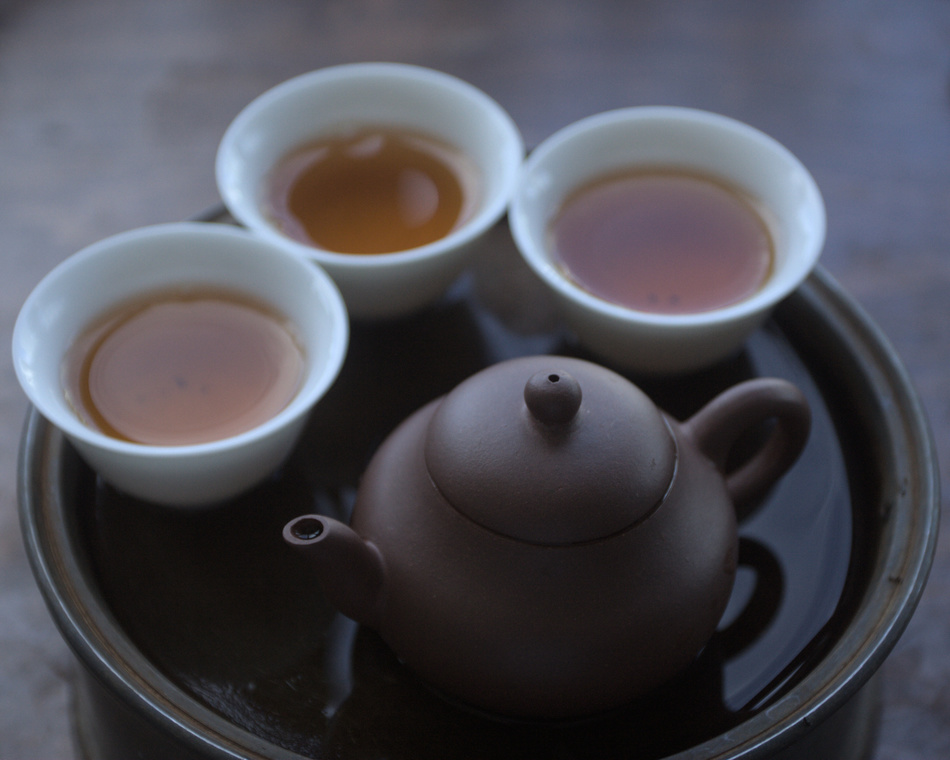
Similar to your experience I also usually use a thick chaozhou DHP pot or one of my zinis for such teas but I have so little of it I was asking for second hand experiments

Lao Cong Shui Xian The Wood 2022 from Xin An Chu.
My first time drinking this special tea, which I have been saving for some time now. I am amazed how fresh and fruity it starts and continues into the most elegant sweet woody notes.
My first time drinking this special tea, which I have been saving for some time now. I am amazed how fresh and fruity it starts and continues into the most elegant sweet woody notes.
- Attachments
-
- IMG_8837.jpeg (157.09 KiB) Viewed 145 times