
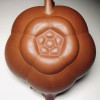
Have been a long time since I dug a rabbit hole and opened a can of worms... let's start one for 2026.
Which would you prefer?? An authentic antique / old teapot or a modern pot with masterful workmanship. Let's put aside the argument of chemicals added into the pot making process and assume that we successfully scour the planet for quality additive free teapots made from top grade clay.
Or you're the adventurous one that hunts for both criteria, antique / vintage pots made by master artists from the bygone era?
Cheers!!
OCTO.
Vintage vs Workmanship... what's your preference?

You know me... all things clay being equal I will always choose old, simply the connection to a bygone time adds a lot to my tea experience. I have never been a "fan boy" being impressed by big names or masters, if the shape is nice I do not care who made it. In a way I prefer the humbler, simpler pots who do not want to be anything else than a good tool for making tea. I believe there is a natural beauty coming out of this functionality and the routine making these by hand i the 100-1000s.

I'm not really looking at it, the same way in terms of performance of the clay as many in this part of the forum. I started out with some very plain and inexpensive tea pots and other brewing vessels that I bought strictly for functionality, but then I got interested in beautiful tea where to add enjoyment to my tea experience. And I've also got some pieces that are still on my shelf because they hold memories--not so much their age, particularly, but because of how they came to me or what memories they hold.
Although I discarded some for aesthetic reasons, here, and there, I more often have passed along teaware because of issues with functionality, not just clay impact on the infused tea, but also because pieces didn't fit my hand or I was burning my fingers due to narrow lips on gaiwans or poor stability making them too easy for me or cats to knock over.
Again, this is less about the specific qualities of particular clays for me (although I do pay attention to that, sometimes more than others), and more about how they work for me and how much happiness they add to my tea sessions--because of beauty, functionality, and memory. I enjoy variety in my sessions and I'm pretty whimsical, I guess, in what I want and use on any one day.
I do sometimes think about what I will do someday when I leave my crooked little house on the crooked little street on the crooked little hill, and have to really cut down to just a handful of pots. And then I get sad to think about the pieces I'd miss and put that thought away for another day.
Although I discarded some for aesthetic reasons, here, and there, I more often have passed along teaware because of issues with functionality, not just clay impact on the infused tea, but also because pieces didn't fit my hand or I was burning my fingers due to narrow lips on gaiwans or poor stability making them too easy for me or cats to knock over.
Again, this is less about the specific qualities of particular clays for me (although I do pay attention to that, sometimes more than others), and more about how they work for me and how much happiness they add to my tea sessions--because of beauty, functionality, and memory. I enjoy variety in my sessions and I'm pretty whimsical, I guess, in what I want and use on any one day.
I do sometimes think about what I will do someday when I leave my crooked little house on the crooked little street on the crooked little hill, and have to really cut down to just a handful of pots. And then I get sad to think about the pieces I'd miss and put that thought away for another day.
This is a tough one! If the quality of the clay were the same, I'd choose the antique pot because I enjoy the history. Good clay and functionality are more important to me than workmanship, though I do enjoy beautiful pots. However, if I could get the same results from a decent pot for $300 and a beautiful pot for $600, I'd pick the cheaper option.
I also get less enjoyment from pieces that I feel are too precious to use regularly. My most expensive teaware is a Qing/ROC UFO Zhuni pot I got from Bok. It has a lot of character (a.k.a. is very beaten up but still works) and while I enjoy looking at it, the tiny handle and precarious lid mean that I worry about causing more damage when I use it. It's also not a great shape for gaoshan in my opinion. I don't regret buying it, but it makes me hesitant to invest in other pieces I would worry about breaking.
I also get less enjoyment from pieces that I feel are too precious to use regularly. My most expensive teaware is a Qing/ROC UFO Zhuni pot I got from Bok. It has a lot of character (a.k.a. is very beaten up but still works) and while I enjoy looking at it, the tiny handle and precarious lid mean that I worry about causing more damage when I use it. It's also not a great shape for gaoshan in my opinion. I don't regret buying it, but it makes me hesitant to invest in other pieces I would worry about breaking.
Always happy for you to dig some new rabbit-holes, OCTO. Definitely antique for me, but the reasons for that were a bit harder to articulate than the answer.OCTO wrote: ↑Sat Jan 31, 2026 3:52 amWhich would you prefer?? An authentic antique / old teapot or a modern pot with masterful workmanship. Let's put aside the argument of chemicals added into the pot making process and assume that we successfully scour the planet for quality additive free teapots made from top grade clay.
Even if we leave the issue of chemicals in modern clay aside, that still leaves open the issue of different clays in different periods performing differently - or different firing methods creating different results - but we could even leave all of that aside, too.
I feel as though I don't appreciate masterful workmanship on modern pots, partially because I'm no expert on aesthetics and don't intend to become one, but also because my perception is that modern pots are already 'too perfect'. Perfect shapes, perfect firing, any minor flaw is enough to justify sending it back - and yet the result feels as 'perfect' as the perfection of Ikea furniture.
In saying that, I have no exposure to masters' pots, whether modern or old - so perhaps seeing them in person would change my opinion. And, of course, there is a big difference between the perfect absence of defects, and the creation of art.
But until I'm persuaded otherwise, I'd prefer to have an antique pot with a lovely shape, lovely character, albeit full of minor imperfections that make it feel more 'perfect' to me than something modern; something that I can understand a person made a century ago rather than something that could have been made in a factory. Plus the history, plus the clay, etc... and, of course, plus the price.
Andrew
It seems the Yixing Zisha OGs are back!OCTO wrote: ↑Sat Jan 31, 2026 3:52 amHave been a long time since I dug a rabbit hole and opened a can of worms... let's start one for 2026.
Which would you prefer?? An authentic antique / old teapot or a modern pot with masterful workmanship. Let's put aside the argument of chemicals added into the pot making process and assume that we successfully scour the planet for quality additive free teapots made from top grade clay.
Or you're the adventurous one that hunts for both criteria, antique / vintage pots made by master artists from the bygone era?
Cheers!!
OCTO.
I have accepted the imperfection of antique/vintage teapots and learned to appreciate the challenges artisans went through to made them, I would prefer a vintage/antique teapot. If I am new to this hobby, a modern pot with masterful workmanship would make the tea brewing journey a lot more pleasant.


Nice to hear from you again @OCTO 
Are we to put aside identification skills and wallet size when answer this question? If yes, old pots from masters. If no, then probably simple vintage pots.
Though I am not so sure anymore as I would have been 10 or so years ago if asked to chose between "green label or later factory pots" vs. modern pots made from good clay. It seems like the availability of modern pots with good clay and workmanship at a reasonable price point, if anything, has improved a lot in the last decade (at least in the West).
Are we to put aside identification skills and wallet size when answer this question? If yes, old pots from masters. If no, then probably simple vintage pots.
Though I am not so sure anymore as I would have been 10 or so years ago if asked to chose between "green label or later factory pots" vs. modern pots made from good clay. It seems like the availability of modern pots with good clay and workmanship at a reasonable price point, if anything, has improved a lot in the last decade (at least in the West).

i strongly favor maximum functionality. good lid fit, good pour, clay that is not too muting, etc. i also appreciate good workmanship/craftsmanship. there's a lot of overlap, but functionality and workmanship are not the same thing. in my eyes, functionality is overall more important, but i'm willing to accept some minor functional loss in exchange for stunning craftsmanship.
if the pot is also old, then that's just the cherry on top, but i'm honestly tired of old pots that do not live up to my functionality and workmanship demands. i have several pots like this. i enjoy looking at them but rarely use them. to be blunt, every factory pot i've owned or used falls under this less-functional umbrella, but they are not the only problem pots.
for me personally, a well made gaiwan is pretty high bar in terms of functionality. over half of my pots sadly do not meet this level of functionality.
if the pot is also old, then that's just the cherry on top, but i'm honestly tired of old pots that do not live up to my functionality and workmanship demands. i have several pots like this. i enjoy looking at them but rarely use them. to be blunt, every factory pot i've owned or used falls under this less-functional umbrella, but they are not the only problem pots.
for me personally, a well made gaiwan is pretty high bar in terms of functionality. over half of my pots sadly do not meet this level of functionality.

Cant afford masters, past or modern hahahaha
Modern pots with pristine clay and good workmanship are very nice.
However, although recognizing that it probably has to do with some psychological effect, I still prefer the older pots despite them being "less" functional. Somehow they feel more alive in the hands...
Modern pots with pristine clay and good workmanship are very nice.
However, although recognizing that it probably has to do with some psychological effect, I still prefer the older pots despite them being "less" functional. Somehow they feel more alive in the hands...
